Featured
Table of Contents
AI tools can aid with this since LLMs or ad-hoc AIs can track policy updates. Here's how AI maximizes Human resources processes: AI takes over recurring and lengthy tasks, like resume evaluating.
It's important to and establish where automation will have the most effect. If you're focused on boosting employment, an AI system that can effectively write task descriptions may be your best bet.
One of one of the most remarkable advancements will certainly be the. This innovation will permit human resources teams to anticipate which prospect will be the ideal for a work just by reading a resume. Nevertheless, it will certainly also determine future labor force demands, determine employee retention dangers, and also recommend which workers might take advantage of added training.
One more area where AI is established to make waves is in. With the expanding emphasis on psychological wellness and work-life balance, AI-driven solutions are already being developed to offer staff members with tailored support. It's likely that staff members won't desire to chat with virtual health assistants powered by AI. They will not truly take care of the real-time comments a chatbot has for them.
Platform Presence and Their Influence on Dent repair for Wellness Providers
Yet, in regards to modification, generative AI might take them even additionally. And speaking about that stress of tech, can come to be a game-changer in human resources automation. This technology is expected to exceed standard chatbots and assist HR teams produce individualized task descriptions, automated performance evaluations, and also individualized training programs.
The actual appeal of generative AI is that it can make web content and options that fit each one-of-a-kind service need. AI automation is rewording HR as it manages repetitive and taxing tasks and allows human resources specialists to focus on calculated goals. AI devices supply speed, accuracy, and cost financial savings. An enhanced staff member experience and trustworthy information for decision-making are likewise advantages of having AI connected right into a HR procedure.
The concept of "a machine that thinks" go back to ancient Greece. However given that the advent of digital computing (and relative to some of the subjects gone over in this article) essential occasions and milestones in the evolution of AI consist of the following: Alan Turing releases Computing Equipment and Intelligence. In this paper, Turing famous for damaging the German ENIGMA code throughout WWII and usually referred to as the "father of computer technology" asks the complying with inquiry: "Can machines assume?" From there, he provides a test, currently famously called the "Turing Test," where a human interrogator would certainly try to compare a computer and human message feedback.
Virtual Assistant Optimization in Dent repair
John McCarthy coins the term "fabricated intelligence" at the first-ever AI meeting at Dartmouth College. Later on that year, Allen Newell, J.C. Shaw and Herbert Simon create the Logic Philosopher, the first-ever running AI computer program.
Neural networks, which utilize a backpropagation algorithm to educate itself, came to be extensively used in AI applications. Stuart Russell and Peter Norvig publish Artificial Knowledge: A Modern Strategy, which comes to be one of the leading textbooks in the study of AI. In it, they look into 4 prospective objectives or meanings of AI, which sets apart computer system systems based upon rationality and thinking versus acting.
Modern Client Experience in Choosing [a:specialty] Services
With these new generative AI methods, deep-learning designs can be pretrained on huge amounts of data. Multimodal versions that can take several kinds of information as input are giving richer, extra robust experiences.
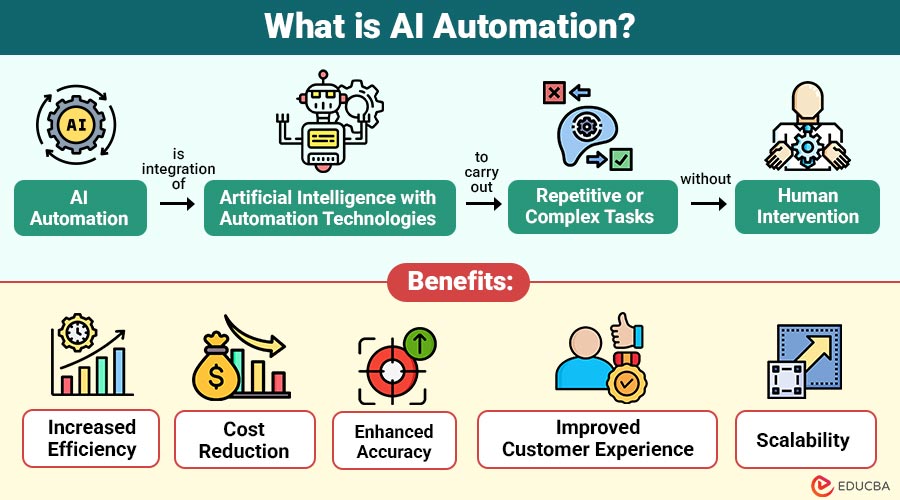
Below are the key ones: Offers Scalability: AI automation readjusts conveniently as service requires expand. It makes use of cloud sources and device knowing models that increase capability without extra manual labor. Offers Speed: AI models (or devices) procedure information and respond instantly. This enables quicker solution delivery and decreases hold-ups in procedures.
Article Themes That Increase Authority for Mental Health Websites
Collect Information: Gather appropriate data from trustworthy sources. The data might be insufficient or have added information, yet it develops the base for AI.Prepare Information: Clean the information by getting rid of errors and redundancies. Organize the information to fit the AI approach you intend to utilize. Select Algorithm: Select the AI formula finest suited for the issue.
This helps check if the AI design learns well and does accurately. Train Model: Train the AI model utilizing the training information. Check it repetitively to enhance accuracy. Integrate Model: Incorporate the experienced AI design with the existing software application. Test Model: Check the integrated AI version with a software application to make sure AI automation functions correctly.
Medical care: AI is made use of to anticipate illness, take care of person documents, and offer customized diagnoses. It sustains physician in decreasing errors and improving therapy precision. Financing: AI helps detect fraudulence, automate KYC, and verify documents swiftly. It scans purchases in real-time to find anything suspicious. Production: AI anticipates tools failings and takes care of top quality checks.
It assists projection need and established vibrant rates. Retailers also make use of AI in stockrooms to streamline stock handling. AI automation works best when you have the right tools built to deal with certain jobs. There are several AI automation tools out there; below are several of them: KaneAI: LambdaTest KaneAI is a generative AI automation screening agent that enables users to create, debug, and advance examinations utilizing all-natural language.
Positioning Tactics for [a:specialty] Providers
ChatGPT: It is an AI tool that helps with jobs like creating, coding, and addressing concerns. ChatGPT is used for composing e-mails, summing up text, creating concepts, or addressing coding problems.

Latest Posts
Patient Enhancement Beyond Dent repair
Brand Growth as a Base of Auto glass
Markup Usage for [a:specialty] Websites